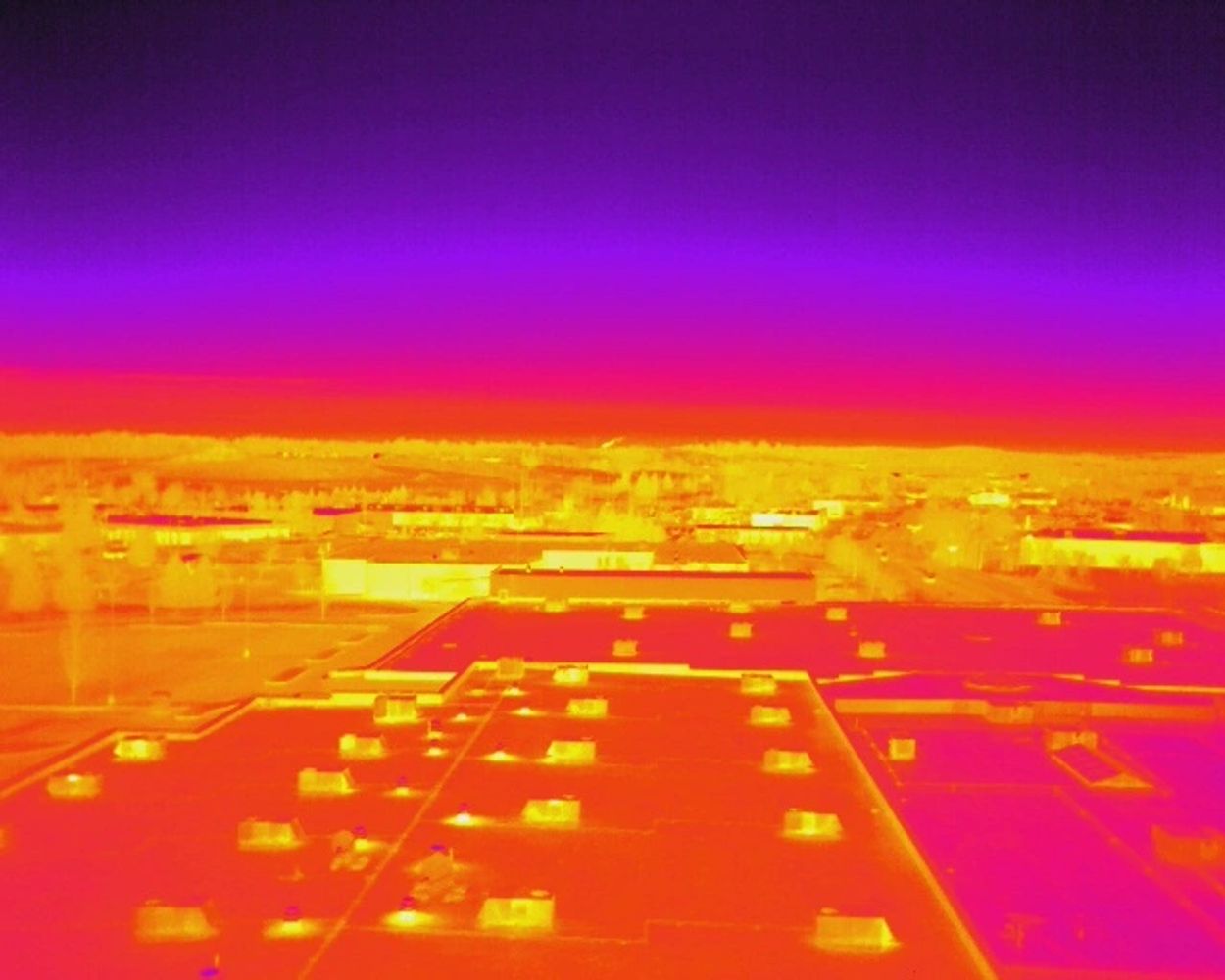
Comprehensive Infrared Imaging Services
Utilizing Only the Best Technology for Your Thermography Needs
Utilizing Only the Best Technology for Your Thermography Needs

Welcome to Keystone Infrared!
Serving Harrisburg, York, Lancaster, and all of Central Pennsylvania.
Providing Certified Infrared services and solutions for Commercial, Industrial, Residential, Electrical, Roofing, Mechanical, Predictive Maintenance, Energy Saving, and Equine fields.
Thermography is the use of an infrared imaging and measurement camera allowing us to see and measure thermal energy emitted from an object. In the infrared portion of the spectrum, all materials on earth emit heat energy. Unfortunately, the unaided human eye cannot see the infrared. Thermographic, or simply thermal image, allows the user to see thermally, revealing anomalies that in turn identify problems in the building and their component electrical, mechanical, plumbing and waterproofing systems.
Thermal, or infrared energy, is light that is not visible because its wavelength is too long to be detected by the human eye, it is part of the electromagnetic spectrum that we perceive as heat. In the infrared world, everything with a temperature above absolute zero emits heat. Even very cold objects, like ice cubes, emit infrared. The higher the object’s temperature, the greater the infrared radiation emitted.
Infrared allows us to see what our eyes cannot. Today’s infrared cameras cannot only see in real time but can also record infrared images and measure the temperatures of target objects quite accurately to within 1/10 of a Fahrenheit degree or better. Points of possible concern show up clearly as hot or cold in relation to their surroundings. Recorded thermal images can be easily inserted into reports and emailed, greatly facilitating communications among traders, attorneys, and other professions.
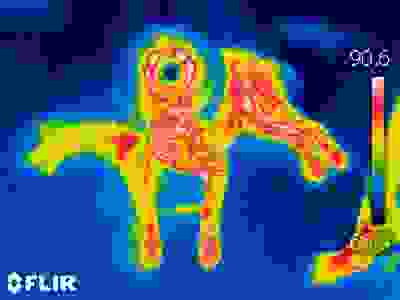
They serve as an invaluable, rational, evidentiary data in cases involving controversy. A picture says a thousand words, and infrared thermography is the only diagnostic technology that lets you instantly visualize and verify thermal performance. Our infrared cameras show you thermal problems, quantify them with precise non-contact temperature measurement, and document them automatically in seconds.
Every material has a unique thermal signature and when moisture, heat, cold, or wood destroying insects are introduced into the structure the thermal signature changes. The changes can be subtle or dramatic but with this thermal image scanning technology, the thermal signatures are detectable where they wouldn’t be able to be seen with the naked eye.
What can an infrared camera do? The infrared camera can be used inside, as well as outside to detect symptoms and signs marked by a temperature difference on a surface. The camera’s capabilities are listed below:











Keystone Infrared is a full-service infrared scanning and inspection company based in Mechanicsburg, Pennsylvania. We currently service all of South Central and South Eastern Pennsylvania to and including Philadelphia. Our thermographers are certified to a minimum of level II credential as specified to ASNT standards by the Infrared Training Center.
We currently service clients, in many applications from residential and commercial construction. Contact us today on our toll-free number (877) 950-1110 for your specific request or for additional information.
Joseph Cline is the owner and president of Keystone Infrared, LLC.(www.keystoneinfrared.com), A’nS Inspect (www.ansinspect.com), and A'nS Company Inc. Joe is a highly trained professional. He has been very actively involved in the building construction, inspection, and evaluation business for over 25 years, and has performed over 9,000 inspections.
Joe is a Level II Certified Thermographer, a member in good standing of United Infrared, Certified ASHI (America Society of Home Inspectors) Inspector, Certified DEP Radon Tester, Certified RESNET/BPI Analyst, Pennsylvania Pest Management Certified Wood Destroying Insect Inspector and ICC/IRC code compliant.
Joe resides in central Pennsylvania with his wife, and an incredibly loyal and trustworthy chocolate standard poodle Sienna. "I base my business mission on those same values, to be trustworthy and loyal to those homeowners, business owners and anyone who needs or requests help". Our goal is to provide products and services that are above the industry standards, give us the opportunity and we'll prove the rest!
Call or e-mail us for a free consultation or to schedule an appointment, we are ready and willing to help!
Toll-Free (877) 950-1110, Local (717) 766-6586, Cell (717) 503-7086
Joe@Keystoneinfrared.com or ansinspect@netscape.net